This post is also available in:
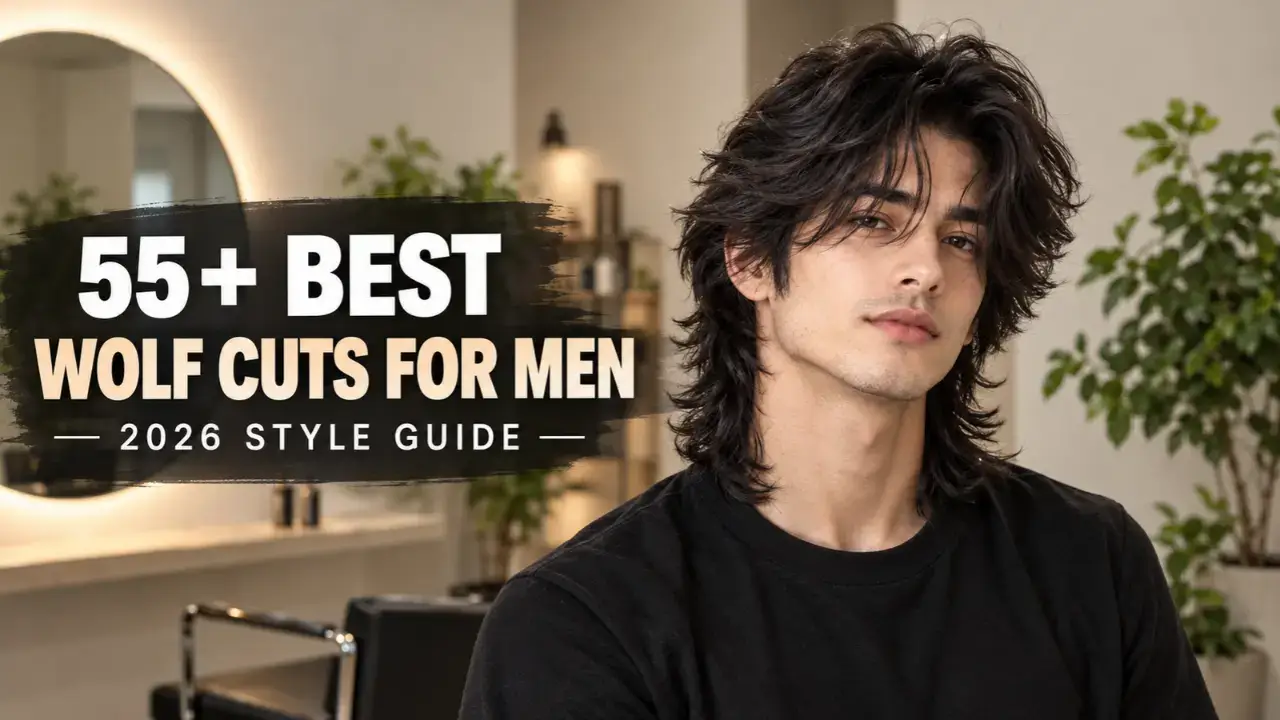
55+ Best Wolf Cut for Men in 2026: Guide and Styling Tips
Want a haircut with volume on top, textured layers, and a longer back? The wolf cut for men combines shag-inspired movement with a mullet-like silhouette, creating a look that can be messy, soft, bold, or polished.
In this guide, explore 55 plus wolf cut styles for men, from short textured cuts to long layers, curly variations, Korean-inspired looks, and modern mullets. You will also learn how to choose a cut for your hair type and face shape, what to tell your barber, and how to style and maintain your look at home.
Whether you want a subtle everyday haircut or a more daring transformation, the right wolf cut starts with understanding your hair and the shape you want.
Explore : Wolf Cut Men Long Hair and Short Wolf Cut Men and Stylish wolf cut for Women
What Is a Wolf Cut for Men?
A wolf cut is a layered men’s haircut that combines the choppy texture of a shag with the shape of a mullet. It features heavy layers on top, softer sides, and longer hair at the back for a textured, modern look.
The style became popular in South Korea and Japan in the early 2020s before spreading through K-pop and TikTok. Each version keeps the same basic shape but varies by hair type, length, part, bangs, fringe, color, or finish, so choose your style based on hair type and length first.
Short, Medium, and Long Wolf Cut Hairstyles for Men
1. Short Wolf Cut

The short wolf cut keeps the crown layers cropped and choppy. It also trims the back short. It is the easiest version of the trend to keep up. It works on thick, wavy, or straight hair. This cut is a smart pick for guys who want low fuss with real style.
Pros: Very low upkeep. Great for hot weather. Easy for a barber to fix if grown out. Cons: Less dramatic look. Shows scalp more on very fine hair. Grows out faster than longer styles.
2. Long Wolf Cut

The Long Wolf Cut keeps dramatic length at the back and sides. It stacks heavy layers at the crown for lift. It works best on straight or wavy hair with enough thickness to hold its shape. This version takes the longest to grow into but gives the boldest contrast.
Pros: Most dramatic layering effect. Great for showing off hair length. Very versatile for tying back or styling up. Cons: Takes longer to grow out. Needs more product to control. Can look stringy without enough density.
3. Medium Wolf Cut

Medium-length hair is the sweet spot for this style. It is long enough to layer with drama. It is short enough to stay easy to manage. It usually falls between the chin and the shoulder. Most barbers say this length gives the truest version of the shape.
Pros: Balanced length and upkeep. Works for most hair types. Easy to adjust styling day to day. Cons: Needs consistent trims to hold shape. Takes longer to grow into from short hair. Can look plain without layering detail.
4. Long Curly Wolf Cut

This is the boldest version, with max length and natural curl. It needs regular deep conditioning. This keeps the longer layers from looking dry.
Pros: Big, bold volume. Shows off natural curl pattern. Great for standing out. Cons: High maintenance for moisture. Long curls can tangle easily. Takes a long time to grow into.
5. Short Textured Wolf Cut
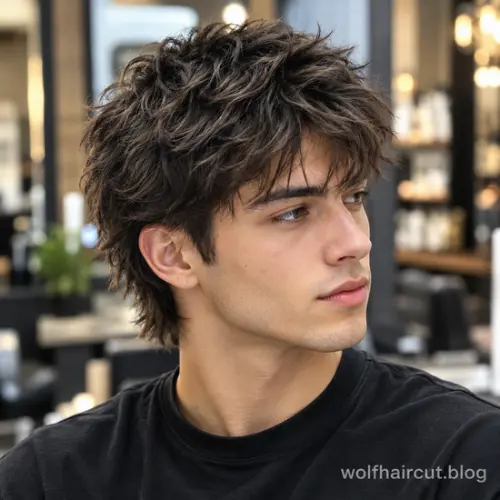
A short textured wolf cut gives men a choppy crown, lightweight layers, and a subtle longer shape at the nape. It works well if you want the character of a wolf cut without committing to long hair. Ask your barber to keep the crown defined and the sides balanced rather than removing too much bulk.
Best for: Short to medium hair with natural texture.
6. Mini Wolf Cut for Men
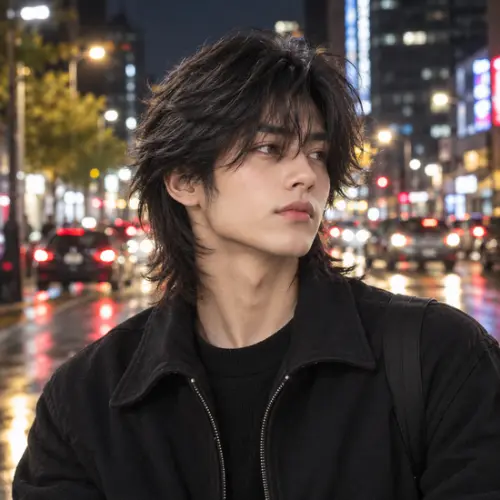
The mini wolf cut is a compact take on the classic style, with shorter layers and a restrained nape tail. It offers a practical option for men who prefer a modern, slightly edgy haircut that does not require substantial length. Keep the back subtle if you want a more understated result.
Best for: Men who want a shorter, easier-to-manage silhouette.
7. Long Layered Wolf Cut Men

Want long hair with more volume and movement? The long layered wolf cut for men is a popular choice for a reason! Its choppy layers remove extra weight, add natural flow, and create a fuller look without sacrificing length. Face-framing layers also help balance your features, making this style perfect for men who want long hair with a bold, textured finish.
Styling Tip: Use a lightweight volumizing mousse on damp hair and blow-dry while lifting the roots with your fingers. Apply a small amount of texturizing cream to the ends to define the layers, reduce heaviness, and enhance natural movement. Keep the face-framing layers loose for a balanced, voluminous look.
8. Long Straight Wolf Cut Men

Want to make long, straight hair look fuller and sharper? The long straight wolf cut for men adds soft layers, face-framing pieces, and extra volume at the crown to prevent hair from looking flat. Since straight hair shows each layer clearly, this style creates a clean, defined finish with a modern edge. It’s perfect for men who want to keep their length while adding texture, shape, and movement.
Styling Tip: Apply heat protectant to damp hair and blow-dry with a paddle brush, directing the layers downward while lifting the roots for volume. Use a flat iron on low heat to smooth stubborn sections, then finish with a lightweight styling cream to define the ends and maintain a sleek, flowing shape without flattening the layers.
Curly, Straight and Wavy Wolf Cuts
9. Curly Wolf Cut

Curls give this cut its texture for free. Longer layers let natural curls form loose, shaggy shapes. This happens without adding bulk. It works on both long and short curly hair. Curly hair holds the shape even without heat tools.
Pros: Low styling time. Curls add natural volume. Works at almost any length. Cons: Needs regular conditioning. Frizz can build up in humid weather. Trims must be precise to avoid a triangle shape.
Related Article: 15 Best Curly Wolf Cut for Men in 2026 (Fresh Style Ideas)
10. Straight Hair Wolf Cut

Straight hair needs extra point-cutting. This fakes the natural texture of shaggy layers. Ask for feathered ends and crown layering. Then use styling product so it does not fall flat. This version often needs the most daily upkeep of any hair type.
Pros: Clean, defined layer lines. Easy to blow-dry into shape. Works well with sleek or messy styling. Cons: Falls flat without product. Needs daily styling effort. Layers can look choppy if cut poorly.
Styling Tip: Use a lightweight texturizing spray or mousse on damp hair, then blow-dry while lifting the crown and directing the layers outward. Finish with a small amount of matte styling cream to keep the feathered ends defined without weighing the hair down.
11. Wavy Wolf Cut

Wavy hair shows off this cut’s movement better than almost any texture. The natural bend separates the layers. It adds volume with no extra product needed. Wavy hair also holds curl from a diffuser longer than straight hair does.
Pros: Natural texture does the work for you. Low product need. Great movement without effort. Cons: Can frizz in humidity. Uneven waves may need extra layering. Requires some length to show off the wave pattern.
12. Curly Undercut Wolf Cut

This removes bulk from the sides. It leaves length and curl definition through the crown and back.
Pros: Sharp contrast between sides and top. Reduces heat and bulk in summer. Shows off curl texture clearly. Cons: Undercut needs frequent touch-ups. Can grow out unevenly. Requires two different cutting techniques.
13. Wolf Cut for Thick Hair

Thick, dense hair holds this style’s volume on its own. It still needs heavier thinning at the crown. This avoids a helmet-like shape.
Pros: Natural volume without product. Layers reduce bulk effectively. Holds shape well between trims. Cons: Needs a barber experienced with thick hair. Can take longer to cut properly. May feel heavy if under-thinned.
14. Permed Wolf Cut

A light perm adds texture to straight hair. This helps it hold the shaggy, layered movement. This is common in Korean-style versions of the trend.
Pros: Adds volume to flat, straight hair. Reduces daily styling time. Creates natural-looking texture. Cons: Costs more than a regular cut. Damages hair if overdone. Needs touch-ups as it grows out.
15. Wolf Cut for Thin Hair

This uses shorter, denser layering at the crown to fake volume. Long, heavy layers can make fine hair look flat, so shorter layers work better here.
Pros: Creates the look of thicker hair. Adds lift at the roots. Low weight keeps hair from falling flat. Cons: Needs frequent trims to keep shape. Product is often required daily. Can thin out faster if hair is already fine.
16. Defined Curl Wolf Cut
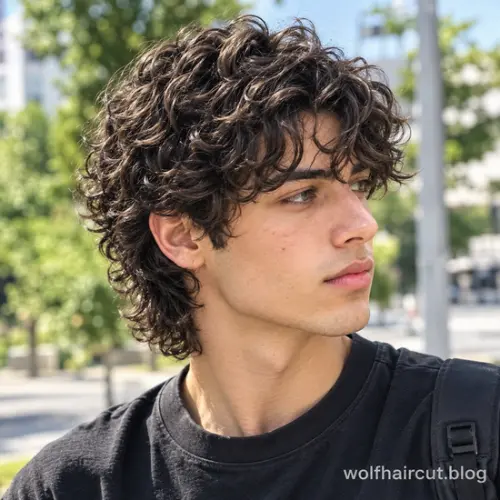
A defined curl wolf cut shapes the crown and sides around natural curl patterns while leaving enough length to maintain the desired silhouette. The aim is to let the curls form distinct sections instead of creating a bulky, rounded shape. Ask your barber to account for shrinkage when dry curls spring upward.
Best for: Naturally curly hair with a defined curl pattern.
17. Wavy Textured Wolf Cut
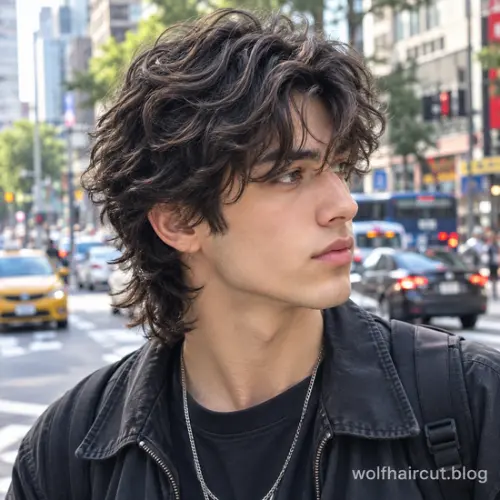
This version emphasizes loose waves and separated layers, giving the haircut natural-looking movement. The crown stays textured, while the back retains enough length to create a recognizable wolf-cut outline. A lightweight styling cream or texture spray can enhance the waves without making them stiff.
Best for: Naturally wavy hair or hair that develops waves when styled.
18. Sleek Straight Wolf Cut
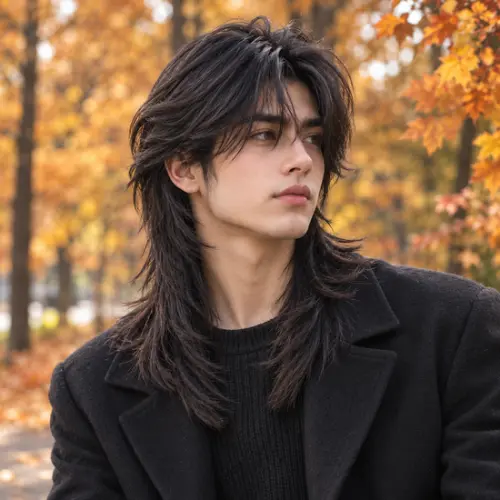
A sleek straight wolf cut has a more controlled finish than a shaggy or tousled version. The layers remain visible, but the hair is styled smoothly to highlight the outline and face-framing pieces. Use heat protection before blow-drying, and avoid heavy products that flatten the crown.
Best for: Men who prefer a neat, polished finish.
Layered, Textured and Voluminous Wolf Cuts
19. Shaggy Wolf Cut

This version comes straight from the ’70s shag. It is made up of messy, undefined layers and soft edges. It works on almost any hair type. It needs almost no styling beyond a texture spray. It is the most laid-back version of the trend.
Pros: Minimal daily styling. Forgiving of small growing-out phases. Works with almost every hair texture. Cons: Can look unkempt if not layered well. Needs frequent trims to stay shaggy, not scruffy. Not ideal for formal settings.
20. Soft Wolf Cut

The soft wolf cut blends its layers more than the classic choppy version. This makes a rounder, more natural finish. It reads well in professional settings. Most barbers suggest this version for a first attempt at the trend.
Pros: Office-friendly. Easy to grow out gracefully. Less noticeable if the layering isn’t perfect. Cons: Less bold or edgy look. Can read as a normal layered cut to some. Needs a skilled cut to avoid looking bland.
21. Layered Wolf Cut

Heavy, planned layering is the base of every wolf cut. This version puts the focus right on that layering. It is shortest at the crown. It gets gradually longer toward the neck. This is often the version barbers use as a starting template.
Pros: Highly customizable. Removes bulk from thick hair. Adds real movement and shape. Cons: Needs a very skilled cutter. Harder to maintain between trims. Can look uneven with an inexperienced barber.
22. Wolf Cut Hairstyle (Classic)

This is the original template every other version copies. It mixes shag-style choppy layers on top with mullet-style length in the back. This is the safest style to bring to a barber who has never cut this trend before.
Pros: Easiest to describe to any barber. Works for almost all face shapes. A solid, timeless base style. Cons: Less unique than newer variations. May feel generic without personal touches. Still needs regular trims.
23. Textured Wolf Cut

Point-cut, uneven ends define this style. The goal is visible separation between layers, not one smooth mass of hair.
Pros: Adds visible depth and movement. Works with texturizing products easily. Great for showing off layer detail. Cons: Needs a skilled point-cutting barber. Can look choppy if overdone. Requires regular trims to stay sharp.
24. Choppy Wolf Cut

A rougher cutting technique leaves sharper, more angular layer lines. This is different from the softer, blended variations of the cut.
Pros: Bold, sharp visual style. Stands out from softer wolf cuts. Works great with straight hair. Cons: Not as forgiving of bad layering. Can look harsh on soft face shapes. Needs regular maintenance to stay defined.
25. Tousled Wolf Cut

Sea salt spray and a scrunch-dry finish give this version a perfect bed-head look. It has messy layers, natural volume, and zero effort.
Pros: Very low daily effort. Natural, relaxed look. Works well for casual lifestyles. Cons: Can look unkempt for formal events. Needs the right product to avoid frizz. Not ideal for fine, flat hair.
26. Full Wolf Cut

This is an unapologetic explosion of thick, choppy layers and volume from crown to nape. It is the boldest, biggest-hair version of the cut.
Pros: Maximum volume and drama. Great for thick or wavy hair. Very memorable, standout look. Cons: Needs strong styling products daily. Can look overwhelming on thin hair. Harder to maintain shape long-term.
27. Fluffy Wolf Cut

The fluffy wolf cut adds soft volume and airy texture to the classic layered shape. It uses shorter crown layers and longer back layers, with feathered ends that create a full, lifted finish. It works especially well for thick, wavy, or slightly curly hair and gives the style a relaxed, modern look.
Pros: Adds natural-looking volume. Creates soft, airy movement. Works well with thick or textured hair. Cons: Can become bulky without proper layering. Needs light styling to maintain volume. May fall flat on very fine hair.
28. Medium Messy Wolf Cut
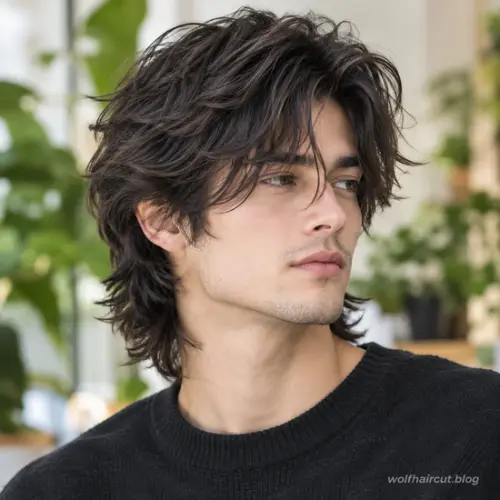
A medium messy wolf cut features separated layers, a relaxed fringe, and an intentionally undone finish. Unlike a sharply defined choppy cut, this version looks softer and more casual. Work a small amount of lightweight texture product through the lengths and use your fingers to shape the layers.
Best for: Men who prefer a relaxed, lived-in hairstyle.
Modern, Edgy and Alternative Wolf Cuts
29. Modern Wolf Cut

The modern take trades the extreme choppy layers of early trend photos. It uses a cleaner, more wearable shape. It has a subtle undercut, tighter neckline, and softer texture. This version is often requested by guys in office jobs.
Pros: Balances trendy and professional. Cleaner lines at the neck. Easier to style quickly. Cons: Less dramatic than classic wolf cuts. Needs regular neckline touch-ups. May feel too tame for bold styling fans.
30. Grunge Wolf Cut

Want a bold hairstyle that brings back the rebellious ’90s rock vibe? The grunge wolf cut for men combines choppy layers, a messy crown, and natural-looking texture for an effortlessly edgy finish. It’s a great choice for men who want a standout look without perfectly polished styling.
Pros: Edgy, rock-inspired appearance; easy, relaxed styling; adds texture and movement; works well with naturally wavy or thick hair.
Cons: Can look unkempt without basic maintenance; may not suit formal settings; needs occasional trims to keep the layers in shape.
31. Edgy Wolf Cut

This exaggerates the choppy, out-of-proportion layering. It makes a more alternative, statement-making look. It is often finished with bleached tips.
Pros: Bold, unique personal statement. Great for creative or casual settings. Very customizable with color. Cons: Not suited for formal workplaces. Bleached tips need upkeep. Can look extreme if layering is uneven.
32. Jellyfish Wolf Cut

This is a close cousin of the trend. It keeps the top shorter and rounder. It lets the underlayer flow long and loose underneath.
Pros: Unique silhouette that stands out. Works well with thick, wavy hair. Adds drama without full length. Cons: Uncommon style, harder to find a skilled barber. Needs precise layering at the crown. Can look unbalanced if not cut well.
33. Emo Wolf Cut

This merges shaggy layering with emo-inspired styling. It has a heavier fringe, darker or dyed tones, and a flatter swept front.
Pros: Strong personal style statement. Works well with dark hair colors. Great for guys who like alt fashion. Cons: Heavy fringe needs daily upkeep. Can obstruct vision if too long. Not workplace-friendly in most settings.
34. Anime Wolf Cut

This pushes the layering and volume further than a typical salon cut. It is styled with strong hold product for exaggerated height.
Pros: Very bold, eye-catching style. Great for costume or creative looks. Adds serious volume and height. Cons: Needs strong hold products daily. High maintenance styling time. Not practical for everyday wear.
35. No Mullet Wolf Cut

This softens the length contrast at the back. It reads as a layered shag rather than a mullet. It is a good pick if you want the texture without the retro statement.
Pros: More wearable in everyday settings. Softer, less bold statement. Easier to grow out evenly. Cons: Less dramatic than classic wolf cuts. May look like a plain layered cut to some. Needs good layering to stand out at all.
Mullet, Fade, Taper and Undercut Styles
36. Untapered Wolf Cut

This version skips the fade or taper at the sides. The layers blend right into fuller sides. This means lower upkeep and fewer touch-up trims. It suits guys who want the layered look but do not want to visit the barbershop often.
Pros: Fewer barbershop visits needed. Grows out very evenly. Good for thick hair types. Cons: Can look heavy or bulky. Less sharp contrast than tapered versions. Not ideal for fine or thin hair.
37. Wolf Cut Mullet

Related Article : Wolf Cut Mullet: 25+ Styles for Women and Men in 2026
This style leans harder into mullet roots than other versions. It has short, choppy layers on top and a longer, feathered back. It is the most retro-leaning take on the trend.
Pros: Bold, retro statement look. Stands out in a crowd. Fun, low-pressure style to try. Cons: Not for conservative workplaces. Can look dated if styled poorly. Needs confidence to pull off well.
38. Wolf Cut Fade

This combines a skin fade at the sides with textured layers on top. It is clean underneath and wild up top.
Pros: Sharp, modern contrast. Fade lasts well between trims on top. Works for both casual and dressy looks. Cons: Fade needs touch-ups every 2 to 3 weeks. More expensive to maintain. Two cutting styles in one visit.
39. Undercut Wolf Cut

Pairing an undercut with layered length on top gives a bold, high-contrast finish. It is easier to maintain between visits than a full taper.
Pros: High contrast, bold style. Longer time between full taper touch-ups. Great for showing off top layers. Cons: Undercut sides still need edging. Can look extreme for some settings. Requires two distinct techniques to blend well.
40. Tapered Wolf Cut

This is neater than a fade. Subtle tapering at the sides creates clean lines without dramatic contrast. This keeps the layered top as the main focus.
Pros: Clean, professional finish. Lower contrast means fewer touch-ups than a fade. Works well for office settings. Cons: Less bold than an undercut or fade pairing. Still needs regular trims. Can look plain without strong top layers.
41. Fluffy Mullet Wolf Cut
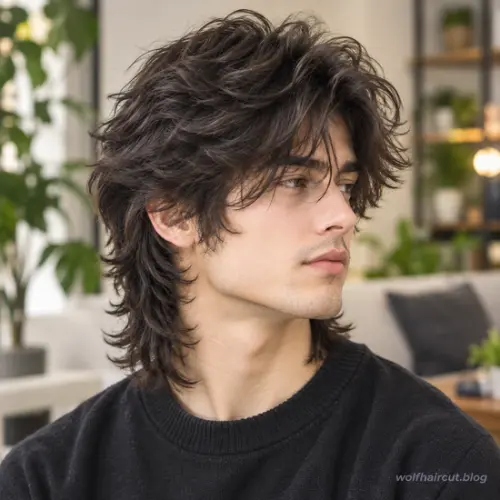
A fluffy mullet wolf cut combines an airy crown with a more noticeable length at the nape. The top is styled for volume, while the back creates the mullet-inspired outline. Keep the transition between the crown and back intentional so the result looks connected rather than like two separate haircuts.
Best for: Men who want a voluminous, statement-making style.
42. Korean Mullet Wolf Cut
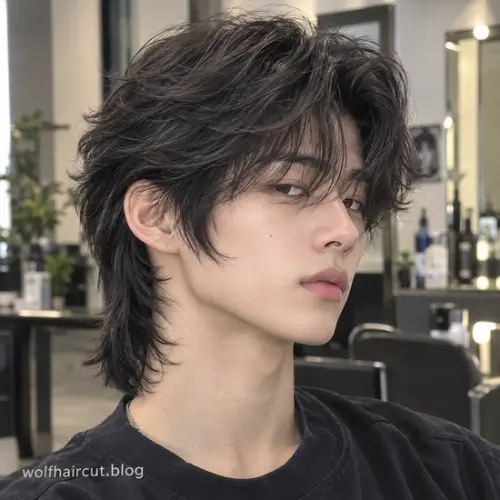
The Korean mullet wolf cut generally favors softer transitions, flowing layers, and a more blended nape than a high-contrast mullet. A center part or curtain fringe can complement the shape, although the exact finish depends on the reference photo and natural hair texture. Ask your barber to preserve movement while avoiding an excessively bulky crown.
Bangs, Fringe Parted Wolf Cuts
43. Wolf Cut with Bangs

Adding bangs or curtain bangs frames the face. It softens the whole look. This works well on round or square faces. Bangs also hide a receding hairline for some men.
Pros: Softens strong or round face shapes. Can hide hairline issues. Adds a youthful look. Cons: Needs daily brushing or styling. Grows out quickly and needs trims. Can get in the eyes if not maintained.
44. Middle Part Wolf Cut

This is a defining feature of the Korean-inspired version. It splits the crown layers evenly. Curtain-style pieces fall on both sides of the face. This part style is popular among K-pop-inspired looks.
Pros: Very on-trend look. Frames the face evenly. Works with straight or wavy hair. Cons: Needs product to hold the part. Grown-out hair can hide the shape. Not ideal for thinning hair at the crown.
45. Wolf Cut with Curtain Bangs

Curtain bangs split down the middle and sweep to each side. This completes the Korean-style look. It frames the face while blending into the crown layers.
Pros: Frames and softens the face. Very trendy, K-pop-inspired look. Works with straight or wavy hair. Cons: Needs daily styling to keep the part. Bangs grow out and need trims often. Can look messy without upkeep.
46. Side-Swept Bangs Wolf Cut
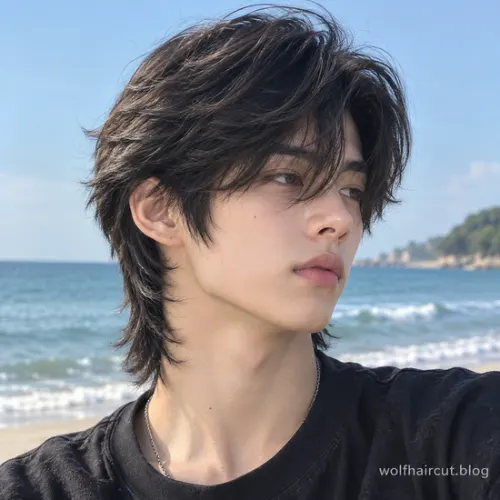
The side-swept bangs wolf cut uses a fringe that moves diagonally across the forehead rather than splitting evenly in the middle. This adds asymmetry and creates a softer transition into the side layers. Ask your barber to leave enough fringe length for the hair to sweep naturally.
Best for: Men who prefer an off-center fringe and flexible styling.
47. Heavy Fringe Wolf Cut
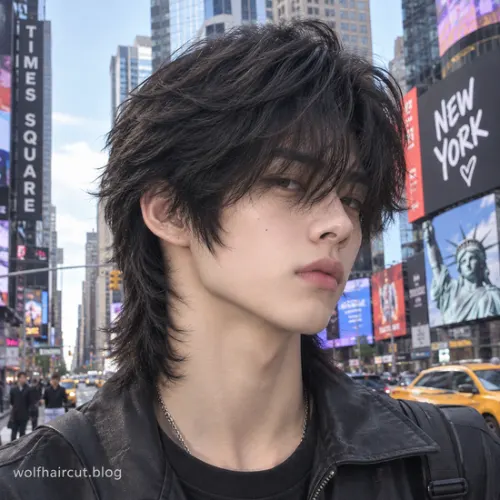
A heavy fringe wolf cut pairs a fuller fringe with layered sides and a textured crown. The fringe creates a stronger focal point than wispy or feathered bangs, while the back maintains the wolf cut’s layered shape. The barber should balance the fringe’s weight with the density of the crown and sides.
Best for: Men who like a bold fringe and have enough front hair density to support it.
Asian Inspired Wolf Cuts
48. Asian Wolf Cut

This look traces back to Korean and Japanese pop culture. This version usually pairs a middle part with curtain bangs. It often adds a light perm for volume. It is one of the most searched variations worldwide.
Pros: Softens facial features nicely. Works great with a light perm. Very on-trend look. Cons: Curtain bangs need daily styling. A perm adds extra cost and upkeep. Not low-maintenance overall.
49. Japanese Wolf Cut

This style has softer, more blended layering. It uses straight or lightly permed textures. It is usually finished with a matte, natural product instead of heavy pomade.
Pros: Natural, understated finish. Easy to wear daily. Works well in professional settings. Cons: Subtle look may be less bold for some. Needs precise cutting to look intentional. Matte products can dry hair over time.
50. Korean Wolf Cut

This is one of the styles that made the trend popular worldwide. It has soft, tousled layers, a middle part, and a slight perm for volume without heaviness.
Pros: Soft, trendy finish. Low daily effort with the right products. Flattering on most face shapes. Cons: Perm adds extra upkeep and cost. Needs touch-ups as perm grows out. Not ideal for very thick hair.
51. Indian Wolf Cut

This is usually adapted for thicker, denser hair. The crown is thinned more to avoid bulk. It is a popular choice for guys with naturally heavy hair.
Pros: Reduces bulk from thick hair. Adds real movement. Works well in humid climates. Cons: Needs a barber skilled in thinning shears. More frequent trims for thick regrowth. Can look uneven if under-thinned.
Wolf Cuts with Beards, Sideburns and Ponytails
52. Wolf Cut with Beard

Pairing this cut with a full or stubble beard balances a shaggy top with a defined jaw. This works well on oval and square faces. It also gives an overall rugged, put-together look.
Pros: Balances hair volume with facial structure. Works for many face shapes. Adds a mature, styled look. Cons: Needs upkeep for both hair and beard. Costs more time at the barber. Can look overgrown if either is neglected.
53. Wolf Cut Ponytail

For men growing hair out, tying the longer back sections into a small ponytail keeps the layered crown visible. It also controls length at the neck.
Pros: Manages length while growing out. Keeps hair off the neck in heat. Shows off crown layers clearly. Cons: Needs enough back length to tie. Ponytail can look sparse at first. Requires hair ties and upkeep daily.
54. Wolf Cut with Beard and Undercut

Combining an undercut, a full beard, and choppy crown layers gives one of the boldest, most masculine takes on the trend.
Pros: Strong, masculine overall look. High contrast between sides and top. Works well for a rugged style. Cons: Needs upkeep for hair, beard, and undercut. Costs more time and money overall. Can look overgrown fast if neglected.
55. Wolf Cut with Side Burns

This keeps the sideburns full and connected to the sides. It adds extra retro, rugged edge to the classic layered shape.
Pros: Adds a rugged, retro touch. Works well with a beard. Unique detail that stands out. Cons: Needs regular edging to stay sharp. Can look unkempt if not trimmed. Not for every workplace.
Face Shape and Hair Color
56. Blonde Wolf Cut

Related Article: Wolf Cut Hair Color: 20 Best Dyed Wolf Cut Ideas for 2026
Lightening the top layers makes the texture pop even more. This is usually paired with a shorter, choppier top for contrast. Blonde tones show off every layer line clearly.
Pros: Highlights the layered texture. Bold, eye-catching look. Works well with sun-kissed styles. Cons: Needs regular toning to avoid brassiness. Bleaching can dry out hair. Higher cost to maintain the color.
57. Wolf Cut for Round Face

This version adds height at the crown. It keeps the sides slimmer. This makes the cut stretch the face instead of widening it.
Pros: Slims round face shapes. Adds visual height. Balances wide cheeks. Cons: Needs precise crown layering. Can look flat if volume drops. Requires regular styling to keep the height.
How to Choose the Right Wolf Cut
Picking the best version comes down to four things: your hair type, your face shape, your hair length, and your lifestyle.
Choose by Hair Type
Curly and wavy hair show off this style’s texture with little extra work. Straight hair needs more point-cutting and daily product. Thick hair needs heavy thinning at the crown. Thin hair does best with shorter, denser layers.
Choose by Face Shape
Round faces look best with height at the crown and slimmer sides. Square faces do well with soft, blended layers. Oval faces can wear almost any version. Long faces should avoid too much crown height and add width with a fringe or middle part instead.
Choose by Hair Length
Short versions are the easiest to keep up. Medium versions give the truest form of the shape. Long versions offer the most drama but take the longest to grow and maintain.
Choose by Lifestyle
Active guys who sweat a lot may prefer a short or tapered wolf cut. Guys in creative jobs can go bold with color or edgy layering. Guys in strict offices should lean toward soft, blended, or tapered versions.
How to Ask Your Barber for a Wolf Cut
Don’t just say “wolf cut.” Most barbers need more detail to get it right the first time.
Bring a Reference Photo
A photo is the fastest way to show your barber the length, layering, and finish you want. Words alone often lead to a different result than you imagined.Choose a reference photo from the hairstyle gallery above to show your barber the length, layering, and finish you want.
Describe the Three Zones
Explain that you want choppy layers at the crown for volume, face-framing pieces at the front, and a longer, blended section at the back.
Mention Your Hair Type
Tell your barber if your hair is straight, wavy, curly, thick, or fine. This helps them adjust the length and number of layers.
Decide on Length Ahead of Time
Know whether you want a short, medium, or long wolf cut before you sit down. This saves time and avoids cutting off more than you wanted.
Wolf Cut Haircut Tutorial: How Barbers Cut It
Understanding the steps helps you talk to your barber with more confidence
Step 1: Section the hair.
The barber divides hair into a top section and a bottom section, clipping each out of the way.
Step 2: Set the front guide.
A small piece at the front is cut to the desired length. This guide sets the shortest layers of the cut.
Step 3: Build the crown layers.
Hair at the top is lifted straight up and cut short. This creates the signature crown volume.
Step 4: Blend the sides.
The barber connects the crown layers gradually toward the sides.
Step 5: Add texture.
Vertical sections are point-cut to remove bulk and add the choppy look.
Step 6: Preserve length in the back.
The back is left noticeably longer than the crown. This length contrast is what defines the whole style.
Step 7: Blend the back layers.
Small sections are lifted and lightly trimmed so the shorter top blends into the longer back.
Step 8: Style and finish.
Texture spray or mousse is applied, then the hair is dried with fingers or a diffuser for the final tousled shape.
Wolf Cut Before and After

Before: Hair with grown-out layers may lack crown volume or have a heavy, uneven shape. Thick hair can appear bulky, while fine hair may fall flat.
After: A well-planned wolf cut can add movement, define the crown, and reduce excess bulk. For fine hair, shorter layers and lightweight styling products may help create the appearance of more volume.
How to Style a Wolf Cut for Men
Step-by-Step
Towel-dry hair to about 80 percent. Apply a lightweight sea salt or texturizing spray.
Rough-dry with a diffuser or your fingers. Lift at the roots to build crown volume.
Apply a small amount of matte clay or pomade through the mid-lengths and ends only. Avoid the roots.
Finger-style the crown layers upward and outward. Then shape the longer back pieces separately.
Finish with a light-hold hairspray if you need the shape to survive humidity.
Best Products for a Wolf Cut

Sea salt spray and texturizing powder build signature crown volume. Moroccan Oil Curl Defining Cream, controls frizz on curly or wavy versions. Skip heavy wax. It flattens the layered crown that makes the style work.
- Volumizing Shampoo: Helps lift the roots and remove buildup without weighing the hair down.
- Lightweight Conditioner: Softens the hair without flattening the crown layers.
- Texture Spray: Adds separation between layers for a tousled finish.
- Sea Salt Spray: Adds texture, especially to naturally wavy hair.
- Matte Clay: Defines layers with a natural, low-shine finish.
FAQs About the Wolf Cut for Men
How long does hair need to be for a wolf cut?
Most barbers want at least 4 to 6 inches, or chin-to-shoulder length, before starting. The style needs enough length to layer dramatically at the crown while keeping visible length at the back.
Is the wolf cut still trending in 2026?
Yes. It has held steady in popularity since 2020. 2026 versions favor cleaner, more wearable shapes over the extreme choppy layering seen in early viral photos.
Can I get a wolf cut with straight hair?
Yes. It just needs point-cutting and feathered ends from the barber, plus texture spray at home, to fake the movement that wavy or curly hair creates naturally.
How much does a wolf cut cost?
At a mid-range barbershop or salon, expect $45 to $90 including wash and style. Prices trend higher in major cities.
How often do I need a trim to maintain it?
Most wolf cut variations hold their shape for 4 to 8 weeks before the layers need refreshing. Shorter versions may need a trim closer to the 4-week mark.
Is a wolf cut high maintenance?
Day to day, no. It’s built to look intentionally undone. The real maintenance cost is at the barber chair: it needs a skilled cutter and more frequent trims than a basic one-length cut.
What’s the actual difference between a wolf cut and a mullet?
A mullet is a length statement: short on top, dramatically long at the back. A wolf cut is a texture statement: heavy layering throughout the crown with a softer, less extreme length drop at the neck.
Does a wolf cut work on thick hair?
Yes, and it’s one of the best cuts for it. The layering removes bulk from thick hair while keeping the volume, so it stops looking heavy and starts looking shaped.
Is a wolf cut good for thin or fine hair?
Yes. Shorter, denser crown layers create the illusion of volume that fine hair often lacks. Just avoid overly long layers, which can make thin hair look flatter.
Can I get a wolf cut on curly hair without a perm?
Absolutely. If your hair is already curly or wavy, you don’t need a perm. The layering technique creates the shape, and your natural texture does the rest.
Is a wolf cut good for a job interview or office job?
A soft, blended, or tapered wolf cut can work fine in most offices. Choppier or bolder versions, like the edgy or grunge wolf cut, are better saved for more casual workplaces.
Can older men wear a wolf cut?
Yes. A softer, blended version can suit older men well, especially paired with a beard or a tapered side.
Final Thoughts: Which Wolf Cut Is Right for You?
The wolf cut has proven itself as one of the most versatile men’s hairstyles of the decade, and as this gallery shows, there’s no single “correct” version of it. Whether you lean toward the tousled wolf cut for everyday texture, the full wolf cut for maximum length and volume, the no-mullet wolf cut for a cleaner, office-friendly take, the tapered or undercut wolf cut for sharper contrast at the sides, or a fluffy wolf cut if your hair curls naturally , the style adapts to your hair type, face shape, and how much upkeep you’re willing to commit.
If you’re unsure where to start, bring one or two of these photos to your barber rather than describing the cut in words , wolf cuts rely heavily on precise layering and fringe placement that’s hard to communicate verbally. And if you’ve got fine or thin hair, ask specifically about point-cutting techniques to fake extra volume, since that’s where a lot of wolf cuts succeed or fail.
Have a wolf cut of your own? Tag us or send it in , we’re always adding fresh variations to this collection.