Wolf Cut vs Shag: 7 Key Differences Explained
This post is also available in:
Trying to choose between a wolf cut and a shag haircut? Both have layers, texture, and a relaxed look, so it is easy to mix them up. The main difference is their shape. A wolf cut has shorter, choppy layers on top and longer pieces at the back, while a shag has softer layers that blend more evenly around the head. Both can look great, but the right choice depends on your hair type, the style you want, and how much time you spend styling it.
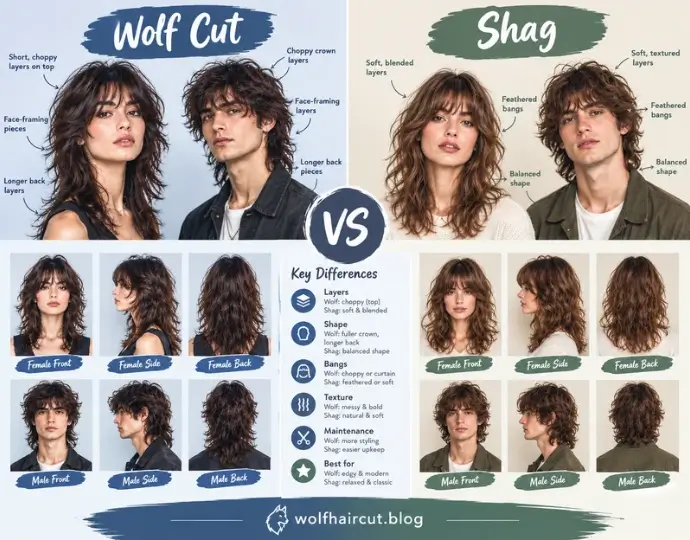
Wolf Cut vs Shag: Quick Comparison
| Feature | Wolf Cut | Shag Haircut |
| Layers | Short, choppy layers on top | Soft, blended layers all around |
| Overall shape | Full crown with longer back pieces | Balanced, rounded shape |
| Bangs | Often choppy or curtain bangs | Often soft, feathered, or curtain bangs |
| Hair texture | Great for adding movement and a messy finish | Great for soft texture and natural movement |
| Daily styling | May need extra help to hold its shape | Often easier to air-dry |
| Maintenance | May need more frequent reshaping | Usually grows out more smoothly |
| Best for | A bold, edgy look | A soft, relaxed look |
Note: These are common features, not strict rules. Your stylist can adjust either cut to suit your hair.
What Is a Wolf Cut?
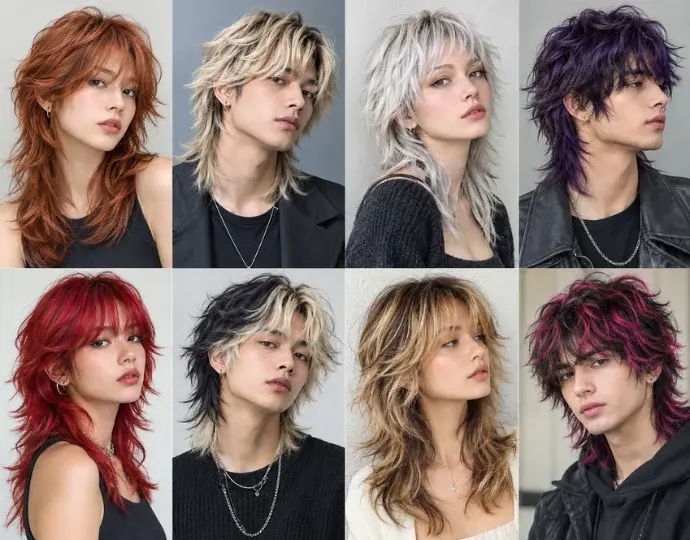
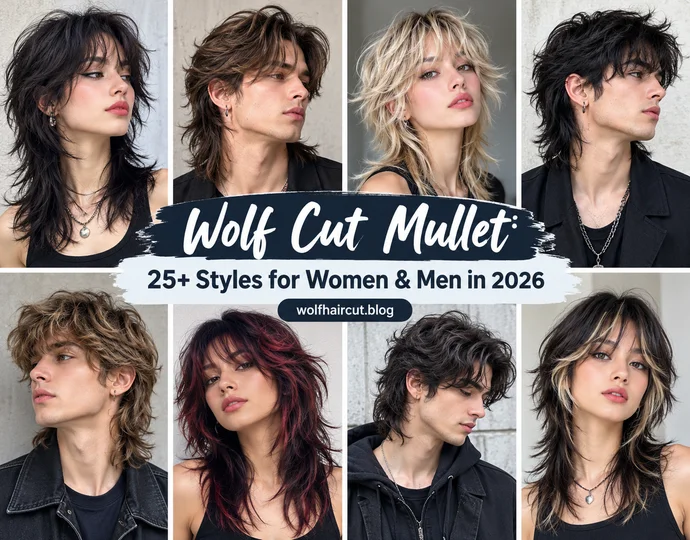
A wolf cut is a layered haircut that mixes the shag’s texture with the longer back shape of a mullet. It has shorter layers around the crown, face-framing pieces, and longer, wispy ends.
The short layers add lift and volume at the top. The longer pieces at the back create contrast and give the haircut its signature shape.
A wolf cut is a good choice if you want your hair to look full, messy, and full of movement. It works on straight, wavy, and curly hair when the layers are cut to match your natural texture.
Choose a wolf cut if you want:
- More volume around the crown.
- Choppy layers and a bold shape.
- Face-framing pieces or textured bangs.
- A modern look with a slight mullet effect.
What Is a Shag Haircut?
A shag haircut uses layers throughout the hair to create softness, movement, and volume. The layers usually blend more smoothly than those in a wolf cut, giving the hair a balanced shape.
Shags became well known in the 1970s and remain a popular choice for people who like a relaxed, rock-inspired look. They can be short, medium-length, or long, with bangs or without them.
A shag can also work well if you want texture without a strong difference between the top and back of your hair.
Choose a shag if you want:
- Soft, blended layers.
- A rounded shape with movement.
- Feathered ends and gentle face framing.
- A haircut that can grow out with less reshaping.
7 Key Differences Between a Wolf Cut and a Shag
1. Layer Placement
The biggest difference is where the layers sit.
A wolf cut usually has shorter, more noticeable layers at the crown. These layers create height and give the hair a choppy look. The lower sections stay longer, making the difference between the top and back easier to see.
A shag spreads its layers more evenly throughout the hair. The result is softer and more blended, with movement from the top to the ends.
2. Overall Shape
Look at the outline of each haircut.
A wolf cut often looks fuller around the crown and narrower toward the back. Its longer nape pieces give it a slight mullet shape.
A shag usually has a more balanced outline. The sides, crown, and ends flow together without a strong break between short and long sections.
3. Bangs and Face-Framing Layers
Both haircuts can look great with bangs, but the finish can be different.
Wolf cut bangs are often choppy, wispy, or paired with short face-framing layers. They help create a bold, textured look.
Shag bangs are often softer and feathered. Curtain bangs are a common choice because they blend into the side layers and frame the face gently.
You can choose either style with or without bangs. Ask your stylist to adjust the length to suit your features.
4. Best Hair Types
Both cuts can work on many hair types. The way they are layered makes the difference.
- Straight hair: A shag can create soft movement. A wolf cut may need root lift or texture spray to keep the crown from looking flat.
- Wavy hair: Both cuts work well. Waves help separate the layers and add natural movement.
- Curly hair: Both can work when the stylist plans for curl shrinkage and natural volume. Short crown layers can spring up more than expected.
- Fine hair: A soft shag may help keep the ends looking full. A wolf cut can add height, but too many short layers or too much thinning may make the ends look sparse.
- Thick hair: A wolf cut can remove bulk and create shape. A shag can soften heavy hair and spread volume more evenly.
Your hair density, curl pattern, and desired length matter as much as the haircut name.
5. Which Cut Suits Your Face Shape?
There is no single haircut that works best for every face shape. Bangs, layer length, and volume can change how either cut looks.
- Round face: Longer face-framing pieces can add length to either cut. Avoid choosing layers that create unwanted width at the cheeks.
- Oval face: Both cuts offer plenty of options. Choose based on your preferred shape and styling routine.
- Square face: Soft layers and curtain bangs can frame the jaw and add movement.
- Long face: A fuller shag or a wolf cut with suitable bangs can help balance the face.
- Heart-shaped face: Layers around the cheeks and jaw can help balance a wider forehead and narrower chin.
Treat these tips as a starting point, not a set of rules. Your personal style matters most.
6. Daily Styling and Maintenance
A shag is often easier to manage because its layers blend together. Depending on your hair texture, you may only need a leave-in product, a little mousse, or a quick air-dry.
A wolf cut may need more styling to keep its crown volume and choppy texture. You can use a texture spray, light mousse, or curl cream, depending on your hair.
Both cuts need trims to keep their shape. A visit every 6–8 weeks can help maintain a defined wolf cut, while a softer shag may stay wearable for longer between trims. Your growth rate and preferred shape will affect the timing.
Neither haircut is automatically low-maintenance. The best choice is the one that works with your natural hair and daily routine.
7. How Each Cut Grows Out
A shag’s blended layers usually soften as the hair grows. This can make it easier to keep a similar look between salon visits.
A wolf cut may lose some of its contrast as the crown layers grow. The top can become less lifted, while the longer back pieces keep their length. A reshaping trim can help restore the original outline.
If you plan to grow your hair longer, tell your stylist before the cut. They can leave more length where you need it and avoid removing too much weight from the ends.
Wolf Cut or Shag: Which One Should You Choose?
Choose a wolf cut if you want a bolder haircut with a fuller crown, choppy layers, and longer pieces at the back. It is a good option if you enjoy texture and do not mind spending a little time styling your hair.
Choose a shag if you prefer softer layers, a balanced shape, and a relaxed finish. It may be a better fit if you want movement without a strong mullet-inspired outline.
Still unsure? Save two or three photos of each style. Look at the crown, sides, bangs, and back rather than judging the haircut from the front alone.
What Should You Tell Your Stylist?
A haircut name can mean different things to different stylists. Describe the shape you want and show a reference photo.
For a wolf cut, say:
“I want short, textured layers at the crown, face-framing pieces, and longer, wispy layers at the back. Please keep enough length at the ends and make the shape suit my natural hair texture.”
For a shag, say:
“I want soft, blended layers throughout my hair, with movement around my face and feathered ends. I prefer a balanced shape rather than a strong difference between the crown and back.”
Bring photos that show hair with a texture and length similar to yours. If you want to keep your length, tell your stylist before they start cutting.
Recommended Products for Wolf Cuts and Shag Haircuts
The right styling products can help you get the best out of your wolf cut or shag haircut. Living Proof Full Dry Volume and Texture spray is a good option for adding lift and texture to flat roots, while Bumble and Bumble Texture Hair Crème can help define choppy layers and create a flexible, natural finish. If you have curly hair, Moroccanoil Curl Defining Cream can help shape your curls, reduce frizz, and bring out their natural movement. Choose a lightweight product for fine hair and a curl cream for curls that need more definition. You do not need all three products; start with the one that matches your hair type and styling needs.
Frequently Asked Questions
Is a wolf cut the same as a shag?
No. Both use layers, but a wolf cut usually has shorter, choppier layers at the crown and longer pieces at the back. A shag tends to have softer layers that blend more evenly throughout the hair.
Which is better, a wolf cut or a shag?
Neither is better for everyone. Choose a wolf cut for a bold, textured shape with more contrast. Choose a shag for softer layers and a more balanced outline.
Is a shag easier to maintain than a wolf cut?
A shag is often easier to maintain because its blended layers can grow out more smoothly. A wolf cut may need more styling and reshaping to keep its crown volume and longer back pieces in balance.
Can I get a wolf cut on straight hair?
Yes. A wolf cut can work on straight hair, but the crown may need help holding its shape. A texture spray, light mousse, or blow-drying technique can add movement.
Is a shag good for thin or fine hair?
A soft shag can work well on fine hair when the stylist keeps enough weight at the ends. Too many layers can make fine hair look thinner, so explain that you want movement without losing fullness.
Can curly hair have a wolf cut or shag?
Yes. Both can suit curly hair. The stylist should account for curl shrinkage, natural volume, and how the curls sit when dry. Ask for a cut that works with your curl pattern rather than against it.
Can I combine a wolf cut and a shag?
Yes. A shaggy wolf cut combines soft, blended layers with more crown volume and a longer back. You can ask your stylist for a softer wolf cut if you want texture without an extreme contrast.
Final Verdict
The main difference between a wolf cut and a shag is the shape of the layers. A wolf cut creates more contrast between the short, full crown and the longer back. A shag offers softer, more even layers for a relaxed look.
Think about your natural hair texture, how much styling you enjoy, and how dramatic you want the result to be. With the right reference photos and a clear plan, you can choose a haircut that fits your style and feels easy to wear.